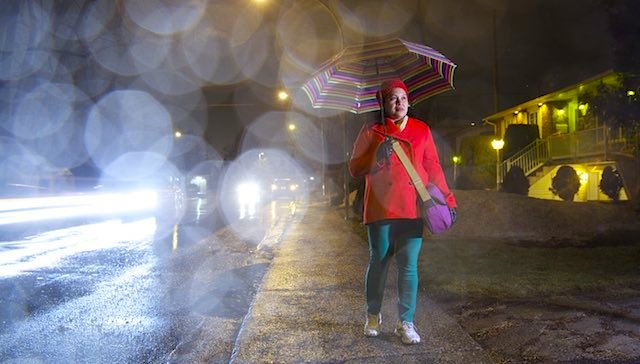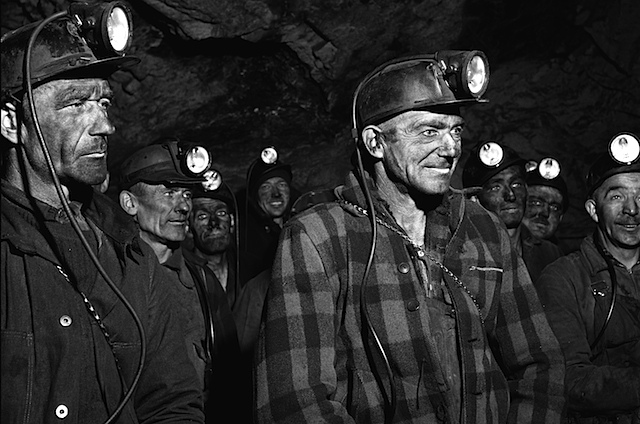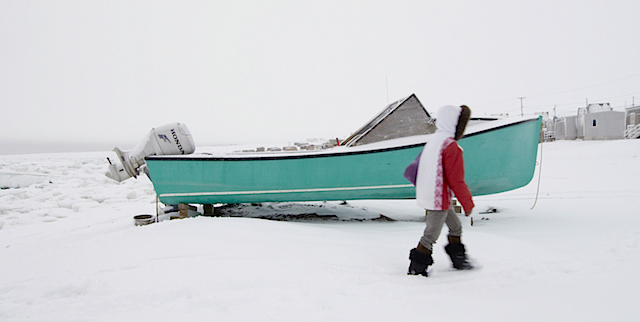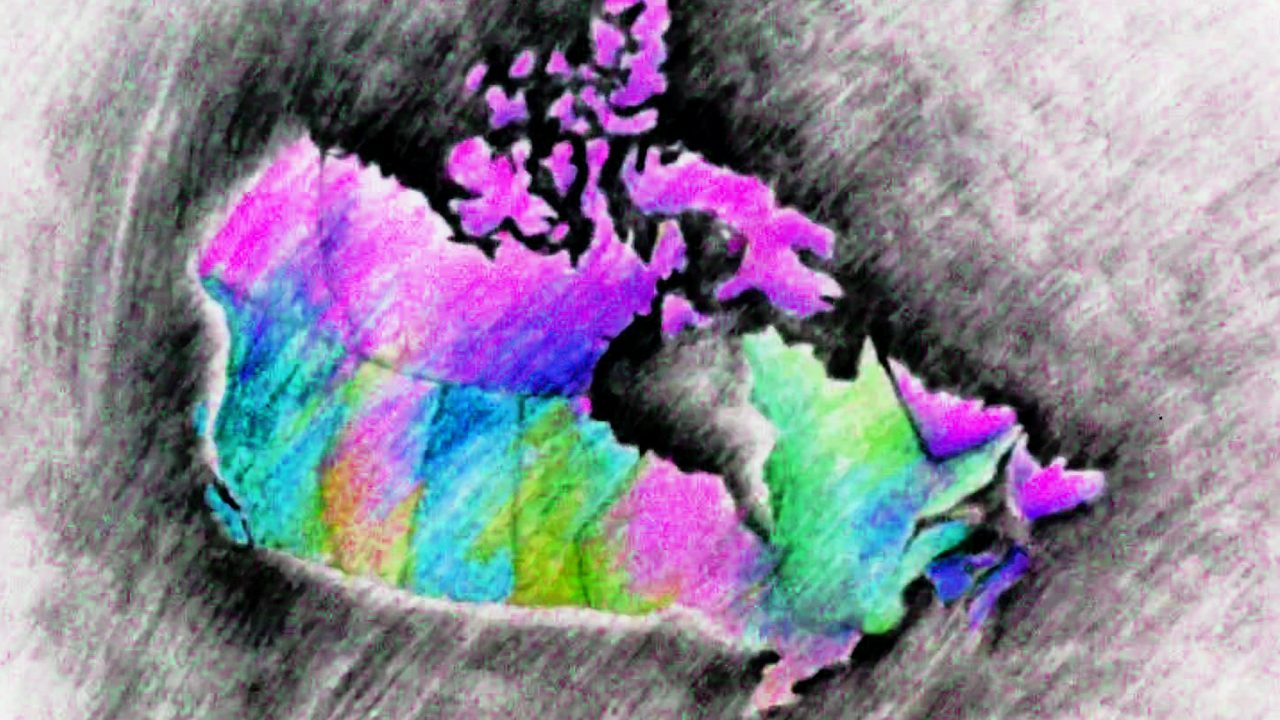
We’re ecstatic to announce that 4 of our films have been nominated for a 2010 Genie Award. The films are:
Best Feature Length Documentary:
Best Animated Short:
The ceremonies will be broadcast on April 12.
Good luck to all the nominees!

We’re ecstatic to announce that 4 of our films have been nominated for a 2010 Genie Award. The films are:
Best Feature Length Documentary:
Best Animated Short:
The ceremonies will be broadcast on April 12.
Good luck to all the nominees!

Whenever I’m overwhelmed by contrast, by conflict, I contemplate one of my favourite lines, a string of words conjured by 13th-century Persian Poet Rumi: “Out beyond ideas of right-doing and wrong-doing, there is a field. I will meet you there.”
It doesn’t matter that I read it on a mug 700 years later. It makes me feel hopeful.
Sounds nice, this place. But in a world of clashing opinions and contrasting agendas, that field starts to look like a dried up sod. And then, last week, something changed.
On November 24, I watched Four Feet Up alongside hundreds of other Canadians, and things began to look a little different. The world is the same, but the way I’m looking at it has changed. Now that I’ve seen it through the eyes of a child living in poverty.
Based on the flood of emails I’ve received in response to the screenings, I think the same can be said of the other viewers – the hundreds of Canadians of all walks of life, from all political affiliations who poured into theatres across the country together last week to watch the film and to discuss the current state of child poverty in Canada.
Now it’s hard to see the walls, the differences between us because suddenly we are in complete agreement about one thing: It’s time for child poverty in a country as rich as Canada to end.
Last week, November 24, 2009, marked the 20th anniversary of our promise as Canadians to eliminate child poverty by the year 2000. On this same date Four Feet Up had multiple screenings across Canada. On this one evening, Canadians in Yellowknife, Victoria, Winnipeg, Toronto, Ottawa, Montreal, Fredericton, Halifax, Wolfville (where the film was shot) and St. John’s watched the film in unison and took part in the vibrant, impassioned panel discussions that followed.
Director Nance Ackerman – who shot the film over the course of a full year – beginning November 24, 2007 – artfully takes the viewer into the world of 8-year-old Isaiah, who lives in poverty with his family amid the abundance of the Annapolis Valley of Nova Scotia.
Without affixing blame, Ackerman leaves us with burning questions: What is to be done about child poverty in this, one of the world’s richest countries? What can I do? And standing in this open field where the film leaves us, we begin to answer these questions. Together.
I’ll leave you with a clip from the film, and if you’re interested in more information visit NFB.ca/four-feet-up or call 1-800-267-7710. You can also leave a comment in the comment section below.
***
Amy Stewart Gallant is the marketing manager for the NFB Atlantic Centre. She is also a playwright and novelist, and is married to singer/songwriter Lennie Gallant.
In September of 1964, Hollywood icon Buster Keaton arrived at Canada’s East Coast to start filming a 25-minute travelogue for the National Film Board. Produced with the full co-operation of the Canadian National Railroad, the film would see him travel from coast to coast on a railway-track speeder.
Keaton was a star of Hollywood’s silent era, directing and starring in dozens of short comedy films from 1917 onwards. He later moved to features, which were huge box office hits. These included his masterpiece The General where he got to “play” with real life locomotives. All of Keaton’s films featured the actor performing incredibly complicated stunts, which were as astounding as they were hilarious. Following the advent of sound, his career took a turn for the worse, and he found himself starring in a string of mediocre films in which he had very little creative control.
When television appeared in the 1950s, Keaton’s films were rediscovered by a new generation, and suddenly his career was back on track. In 1964, director Gerald Potterton was going to work at the NFB in Montreal when he saw a railway track speeder on the railroad tracks. He immediately thought of Keaton’s The General and wasted no time in contacting Keaton, who agreed to star in the NFB film simply because it was about his hobby, railroads, and he would get to ride the rails in Canada.
Shooting began on the 5th of September near Halifax, where Keaton was filmed coming out of the ocean onto dry land. This gag, while very funny, was tough on him, as the water was freezing cold. Potterton shot the film chronologically traveling from East to West. Most of the gags were improvised along the way with Keaton. The film was conceived as a colour travelogue short destined for the cinema screens of Canada and the world. Filming was done on 35 mm, but without sound. It was decided to shoot in the style of a silent film of old, complete with music and sound effects, but no dialogue. Potterton later said that the noise of the speeder and other trains would have made location dialogue shooting next to impossible. Interestingly, Potterton, who had mostly made animated films up to that time, wanted to shoot Keaton in live action and add him to an all-animated film. Thankfully this idea was dropped in favour of an all live-action film.
Shooting the film in Canada was extra special for Keaton, as he hadn’t visited the country in 48 years – since the time when he toured with his family’s vaudeville act prior to moving to Hollywood.
Accompanying Keaton on his Canadian assignment was his third wife Eleanor, who watched over him day and night. Keaton turned 69 during the production, but insisted on doing his own stunts. He would often work these out with Potterton the night before. They would be inspired by whatever the men happened to see along the way. The sequence with Keaton opening the impossibly large map while crossing over a railway trestle caused concern to all. Keaton insisted on doing this stunt himself much to the chagrin of Potterton and the crew. The pair and the film crew travelled throughout the country in a special railway car complete with chef and steward.
A second film crew followed Keaton and made the one-hour documentary Buster Keaton Rides Again, a behind-the-scenes look at the making of the film. This documentary would be shown on Canadian television while The Railrodder was shown on the nation’s screens.
The filming took six weeks in all. The crew had to endure scheduled trains passing on the main line, which slowed down filming considerably, and cold temperatures. Keaton took it all in stride and would retire at the end of the day to watch the World Series on television in his railway car. The sequence that opens the film was shot in London with a stunt double. Keaton was later matted in.
Press coverage during the shoot was comprehensive. From coast to coast, newspapers sang the praises of Keaton. Some towns honoured him and his wife with film screenings and dinners throughout his journey in Canada.
The film was released theatrically by Columbia pictures in October 1965, playing with Gilles Carle’s La vie heureuse de Léopold Z in Quebec. In English Canada it would play with a variety of Hollywood films. Reviews, unfortunately were mixed. Most reviewers thought the film too simplistic and not very funny. They felt it should have sacrificed the scenery for more Keaton.
The film was also distributed theatrically in the USA and throughout Europe, including the UK, Portugal, France, Belgium, Finland, Sweden and the USSR. Since there was no dialogue, it was very easy to sell in other language markets. It would also play on television around the world, notably in Italy, Argentina, Poland, Yugoslavia, Germany and South Africa. It enjoyed a second life on television in Canada and later on home video. Sadly Keaton would only work on a couple more films before passing away in February of 1966, just when The Railrodder was gracing the nation’s screens.
I never fail to smile when I see this film. Keaton is as spry as he was in his heyday. Some of the gags are hilarious. I especially enjoy Keaton stopping in the middle of the Prairies to enjoy his afternoon tea while a pack of bison looks on. The Railrodder remains the work of a comic genius, who could wring a laugh out of any prop on hand. As much as I admire Potterton for making it, the film is Keaton’s and will always remain his. May he forever ride the great railroad in the sky.
In the late 1950s, the NFB sent writer Charles Cohen out to Saskatchewan to investigate the possibility of making a film on farming and irrigation. After a great metamorphosis, this film would eventually become the NFB’s first ever fiction feature film. This is the story of how it came about.
Cohen had prepared a project of three half-hour documentaries on irrigation to be made for television. The NFB submitted this to the CBC, who refused it outright. The NFB felt that the idea was well worth a film and instead proposed a single one-hour documentary. Once again, the CBC refused.
Donald Haldane was brought in to direct, and he suggested making this a fiction film to tell the story. While the NFB had produced many short films for theatrical distribution over the years, it had never produced features. It was felt that this was too important a project to abandon so it was decided that the story would be shot as a short feature film to play in the nation’s cinemas.
Cohen was asked to re-write the screenplay. He decided to go with a more personal story, concentrating on the trials and tribulations of the Greer family, who had gone out west from Montreal to try their luck at farming. It is essentially the story of farming pioneers in a land that can be bountiful but also cruel.
Haldane got permission to shoot the film in widescreen 35mm but in black and white to keep the costs down. SuperScope, a less expensive alternative to the then popular CinemaScope, was chosen. This caused cameraman Reginald H. Morris csc some trouble as it was the first time it had been used at the NFB.
Regardless of the technical problems, production began in the summer of 1961 with shooting in and around Swift Current, Saskatchewan. Several stage actors from Toronto were brought in to take on the principal roles. These included Frances Hyland, who was known from the stage but had done some television work at that time, and James Douglas. Locals were signed up to play some of the smaller supporting roles. The filming on the prairies took several weeks before production wrapped.
The important blizzard scene was shot in winter of 1962 at the NFB studio in Montreal. Some dubbing had to be done to correct the sound problems caused by the omnipresent prairie wind during the location shooting. The production budget swelled to about $218,000, which was about twice what was originally allocated.
Eventually, Columbia pictures agreed to distribute the film. It was decided to premiere the film in Swift Current and release it throughout the Prairies a couple of towns at a time. The premiere, on September 25th, 1963, was a huge success as were the showings throughout the Prairies. Some theatres reported ten times more people attending this film than usual. The film was also released in B.C. and in the east, eventually playing in more than 500 cinemas nationwide. Critics lauded the film for its realistic portrayal of pioneer life and the beautiful cinematography as well as the solid acting. Variety called it “A good clean simple film made with professional care.” It was obvious that the film touched a nerve with audiences, who appreciated seeing a Canadian story for a change.
The French dubbed version, Un autre pays, premiered in Quebec City on November 20th, to great acclaim, and played throughout Quebec. Eventually the film was released in the United Kingdom and in the United States. Columbia also released it theatrically in Central and South America. It would play on television in Switzerland, Yugoslavia, China and Malaysia among other countries.
Running a short 70 minutes, the film was offered as part of a double feature or accompanied by the NFB’s haunting 38-minute film on the war dead of the two World Wars, Fields of Sacrifice. Either way, it played throughout 1963 and 1964 on the nation’s screens before making its way to the non-theatrical circuit, where it continued to play in schools and community centres on 16 mm. It later enjoyed a second career on television and home video.
Today, the film still offers a gripping perspective on pioneer life, told in a sensitive way with beautiful cinematography and great acting. Frances Hyland stands out as the woman who reluctantly accompanies her husband out west but eventually comes to love the Prairies. The NFB gambled in making this first feature film, as it could have bombed with audiences. The success of Drylanders led to a whole slew of modest features being produced at the NFB in French and English throughout the 1960s and 1970s.

This week’s Canada CODE challenger is Bonnie Sherr Klein, a familiar name here at the NFB for such works as Citizen’s Medicine, Little Burgundy, and, of course, Not a Love Story. She asks, “What is your greatest talent?”
In issuing her challenge, Klein joins the ranks of other filmmakers, writers and prominent Canadians who are jumping at the chance to get in on the Canada CODE action. A few weeks back, Carts of Darkness director Murray Siple tackled the subject of work, stating that, “Your work should be driven by passion and in that context, be an amazing legacy.”
Have you taken the Canada CODE challenge yet?