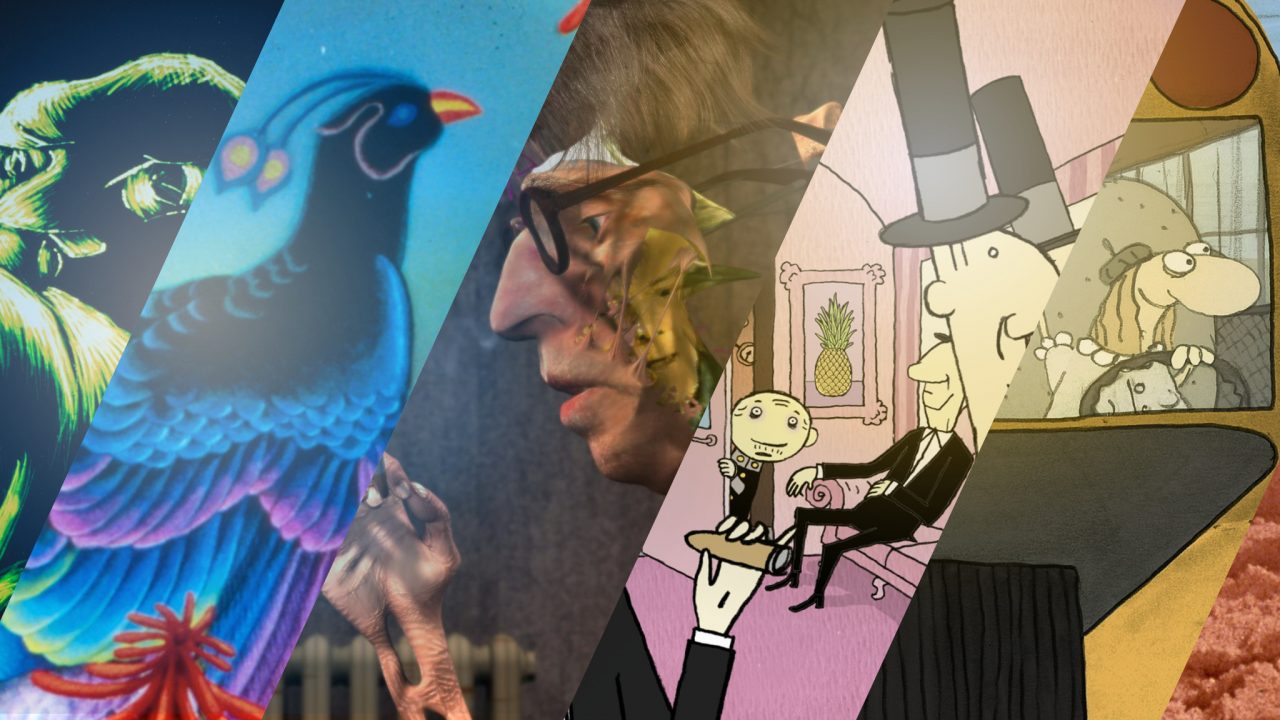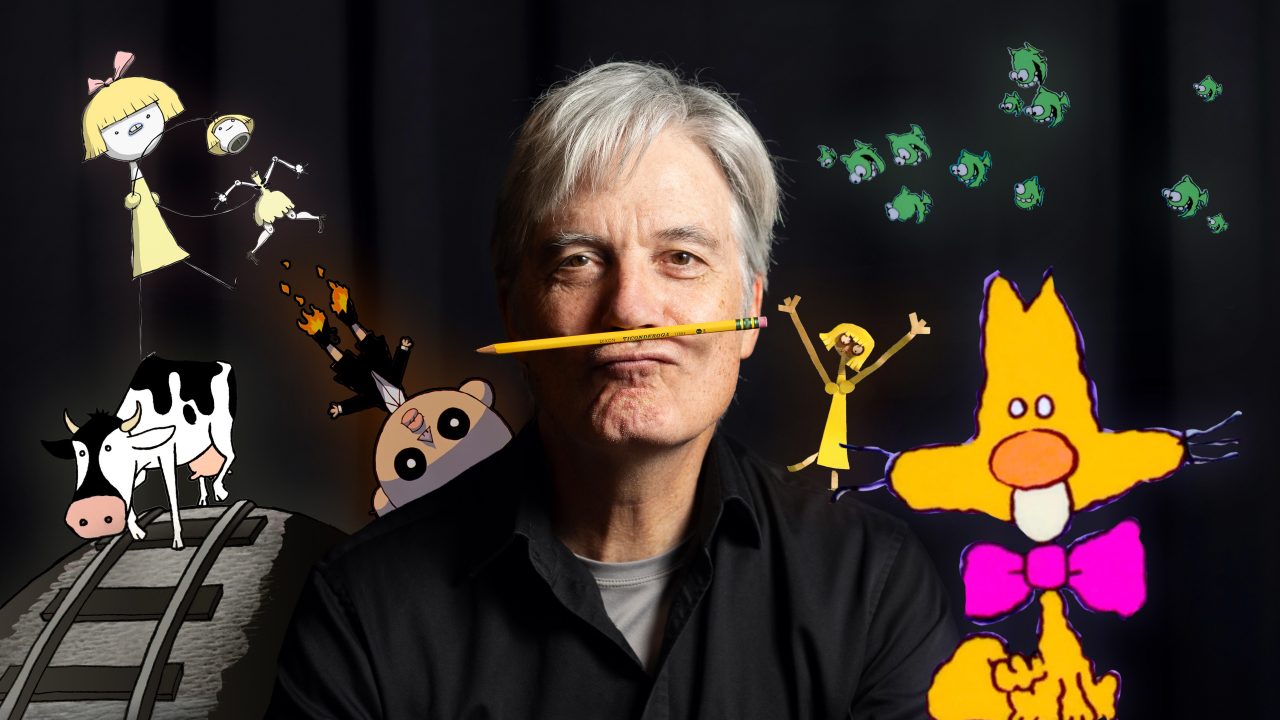
A Cat, a Strange Visitor, a Cow, a Frog and a Little Girl: The World of Cordell Barker
A Cat, a Strange Visitor, a Cow, a Frog and a Little Girl: The World of Cordell Barker
These few words alone could summarize the five films Cordell Barker made at the NFB. Five characters who aren’t always the protagonists, but who invariably act as disruptive factors, setting things in motion and sometimes serving as a point of contrast. Let’s take a closer look.
A cat
The Cat Came Back (1988) tells the story of old Mr. Johnson, who one day opens the door to find a tiny yellow cat in a pretty basket on his stoop. Little does he suspect how his life is about to change. At first, he’s completely taken with the adorable kitty. But the charm soon wears off when the cat breaks his favourite rattle, and he promptly decides it can’t stay. The cat, however, has other ideas. Despite the old man’s increasingly desperate efforts to rid himself of his furry problem, it just keeps coming back—hence the film’s title. This gives us our first example of a character whose role is to set the plot in motion.
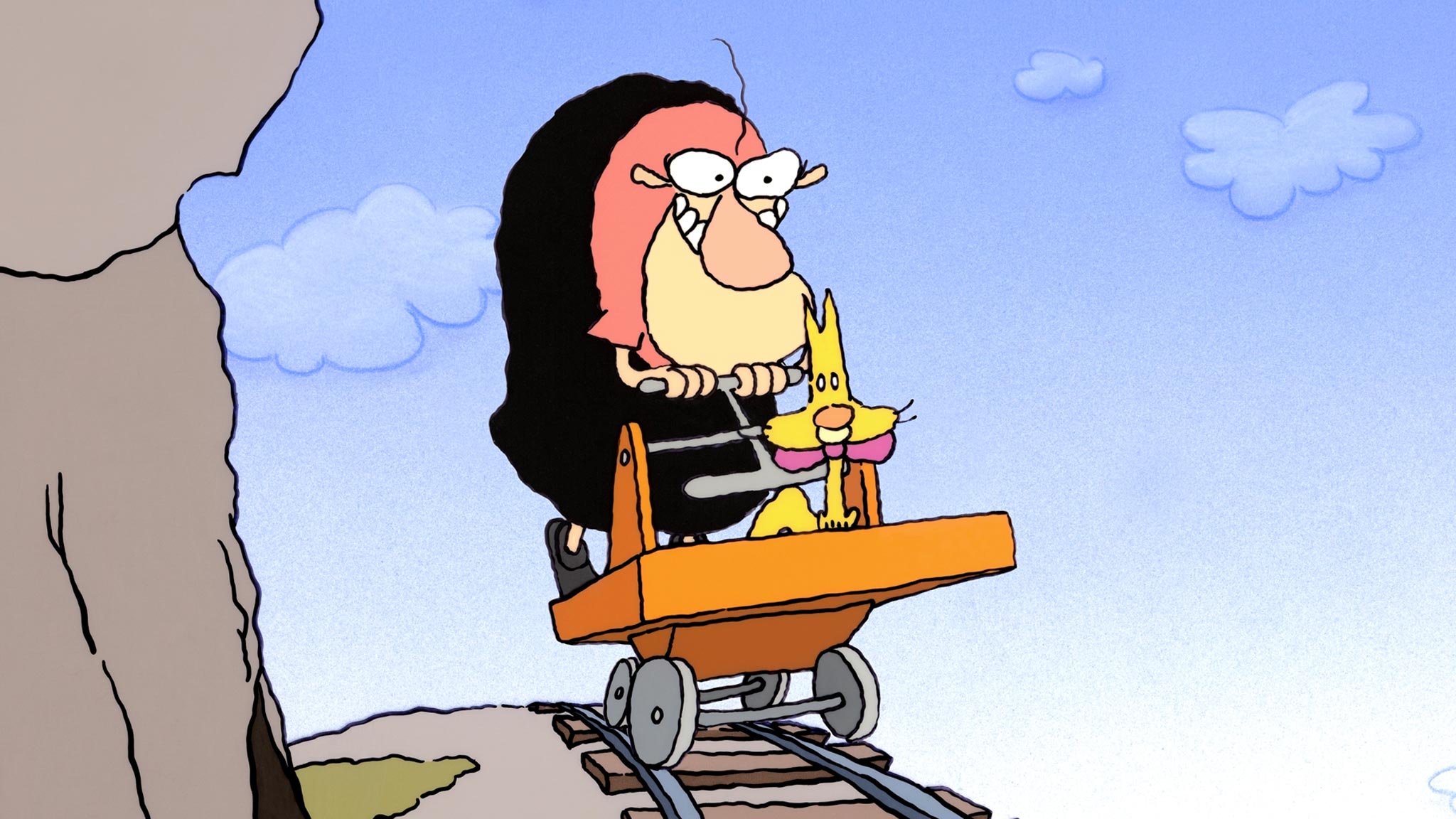
Inspired by a folk tune whose catchy refrain you’re sure to find yourself humming after the film, Barker’s first animated short was a huge hit with audiences and critics alike. It picked up more than 15 awards in Canada and abroad, including an Oscar nomination, and quickly became a classic in our collection. Not bad for a self-taught filmmaker who was convinced his film was terrible and that he’d soon be heading back to construction work! The film effectively launched Barker’s career as an animator. A Winnipeg native, he got his start at Kenn Perkins Animation before joining the animation unit at the NFB’s Winnipeg Studio in 1982.
The Cat Came Back, Cordell Barker, provided by the National Film Board of Canada
The Cat Came Back helped Barker discover his signature style—simple drawings that allowed him to focus on rhythm, pacing and comic timing—and underscored the central role of music and humour in his work. Just as importantly, it let him develop his own distinct genre: hilarious, seemingly child-friendly stories with a darker undercurrent that appeals to adults. These qualities would all become the hallmarks of his later work. Finally, it’s worth noting that the film bears the unmistakable stamp of the Winnipeg studio’s animation style at the time, with its frumpy, rubbery everyman and his hyperbolic features: protruding teeth, bulging eyes and a guttural, piercing voice.
A strange visitor
Strange Invaders (2001) invites us into the world of Roger and Doris, a loving couple leading a quiet life in their cozy home. One night, they’re abruptly awakened by a strange visitor: a toddler. Could this be the answer to their prayers? That question is soon put to the test as their visitor takes over the house, wreaking havoc and destroying everything in its path.
Strange Invaders, Cordell Barker, provided by the National Film Board of Canada
In his second film, Barker employs the same dramatic device as in his first, swapping out a tenacious cat for a disruptive infant. We find the same pared-down animation style and familiar backdrops—indeed, the couple’s house is strongly reminiscent of Mr. Johnson’s in The Cat Came Back. His characters may be a tad more recognizably human this time around, but they still retain Barker’s trademark exaggerated features.
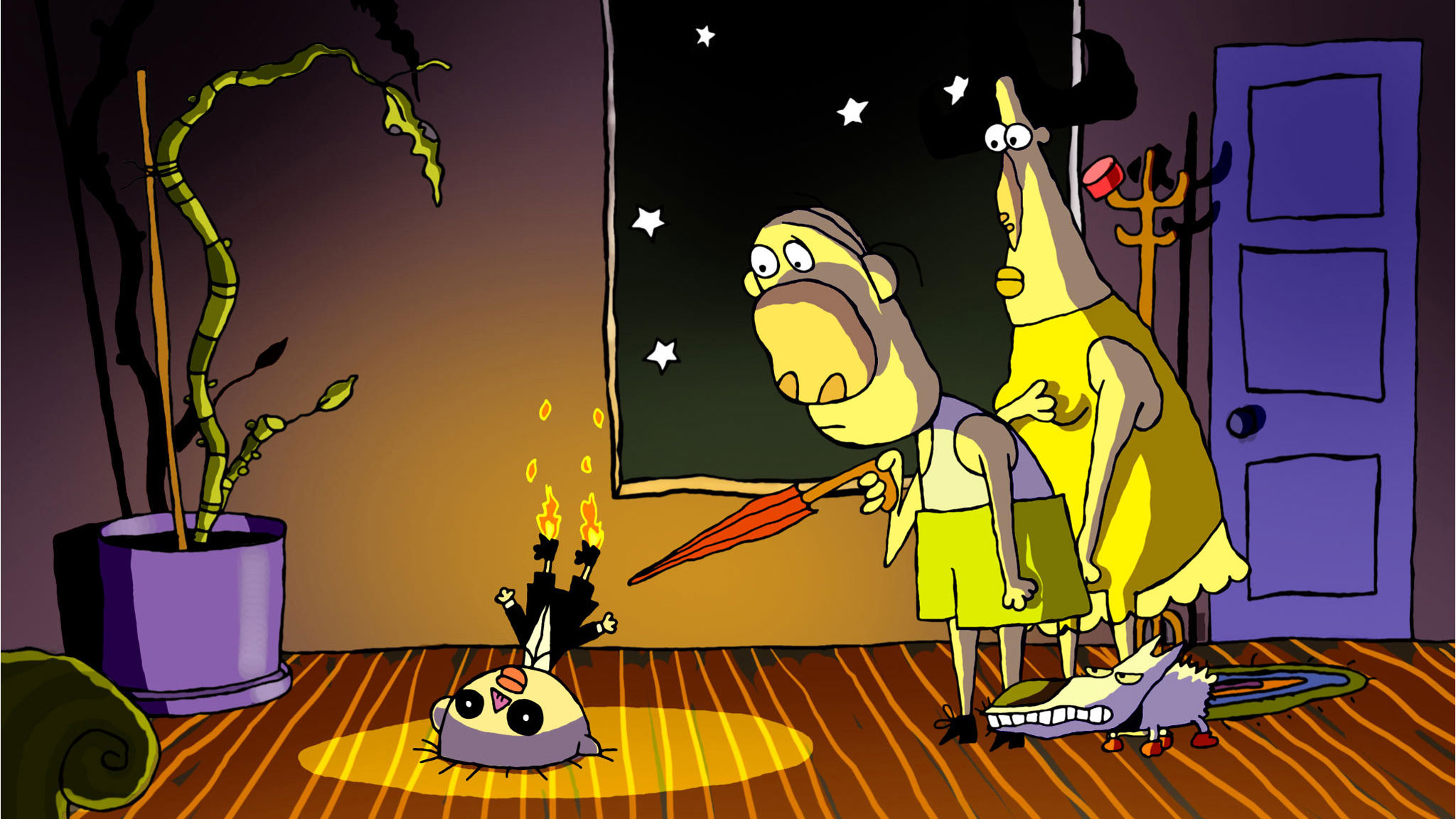
It’s a comedy, but decidedly one for adults. Barker’s message is clear: the arrival of a child in a couple’s life is not unlike an alien invasion—and kids have a knack for turning things upside down. You may have spotted the frame that flashes by for a split second during the rapid-fire photo montage. The hidden message reads: “Cordell’s kids are evil. Dillon, Joshua + Jackson. Don’t pause this film.”
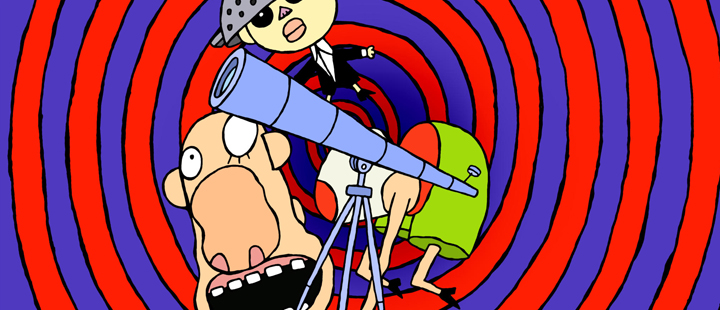
Just like its predecessor, Strange Invaders was a great success with audiences and critics alike, earning an Oscar nomination and picking up more than 15 awards along the way.
A cow
As a cow ambles along a railway track, a passenger train barrels down the very same line at full speed. When the train inevitably collides with the animal, the impact throws its braking systems into disarray. Packed with revelers oblivious to what’s happening around them, the train picks up speed and is soon careening out of control. How is this all going to end? Such is the premise of Runaway (2009), Barker’s third animated short. It’s unquestionably a metaphor for humanity’s carelessness in the face of looming danger—a humanity marked by class divisions, conflict and injustice, hurtling headlong toward catastrophe.
Runaway, Cordell Barker, provided by the National Film Board of Canada
Just as in his first two films, a single character—in this case, the cow—acts as the disruptive element. Indeed, the collision with the animal is what causes the engine to malfunction. But the cow also functions as a point of contrast: its ambling pace set against the train’s speed highlights the fact that both the locomotive and its passengers are rushing toward disaster.
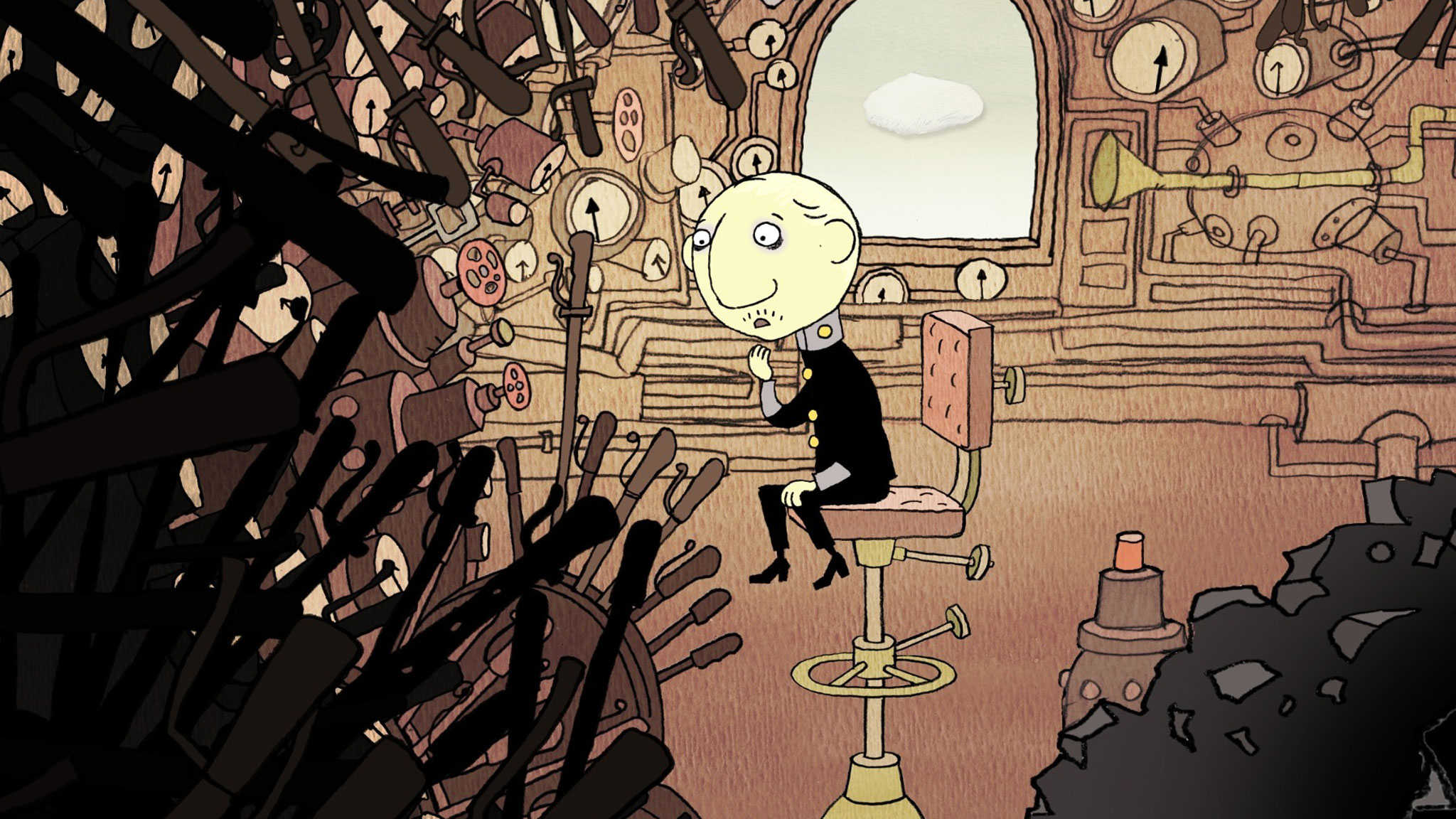
The subject may be serious, but Barker, as you might expect, handles it with humour and whimsy. The music by Ben Charest—composer of the soundtrack for the animated feature The Triplets of Belleville (2003), which was nominated for the Best Original Song Oscar—leans into the absurdity, establishing the film’s comic tone while dictating its pacing and tonal shifts. Barker’s animation, this time somewhat less cartoony, blends with the soundtrack seamlessly.
Runaway received some 15 international awards, including the Petit Rail d’Or for Best Short Film in the Directors’ Fortnight section of the 2009 Cannes Film Festival.
A frog
With If I Was God… (2015), Barker embarks on something more personal: a true story, if the opening credits are to be believed (Barker himself narrates the film’s original English version). In any case, we meet 12-year-old Cordell in his classroom, lost in a daydream. He tells us he feels “sort of godlike.” Feeling the first stirrings of adulthood, he senses that he’ll soon be able to do whatever he wants—a thought that fills him with a heady sense of power. He doesn’t yet know what he’ll become, only that it will be something impressive. Tasked with dissecting a frog, he suddenly realizes he holds the power of life and death over the creature. He can bring it back to life at will—something only God can do. Could he be God? If he was, he could rid the world of evil and get everything he wanted.
If I Was God…, Cordell Barker, provided by the National Film Board of Canada
In this darkly funny coming-of-age story, it’s the frog who serves as the unlikely catalyst. After all, isn’t it the frog’s dissection and subsequent reanimation that sends young Cordell’s imagination racing?
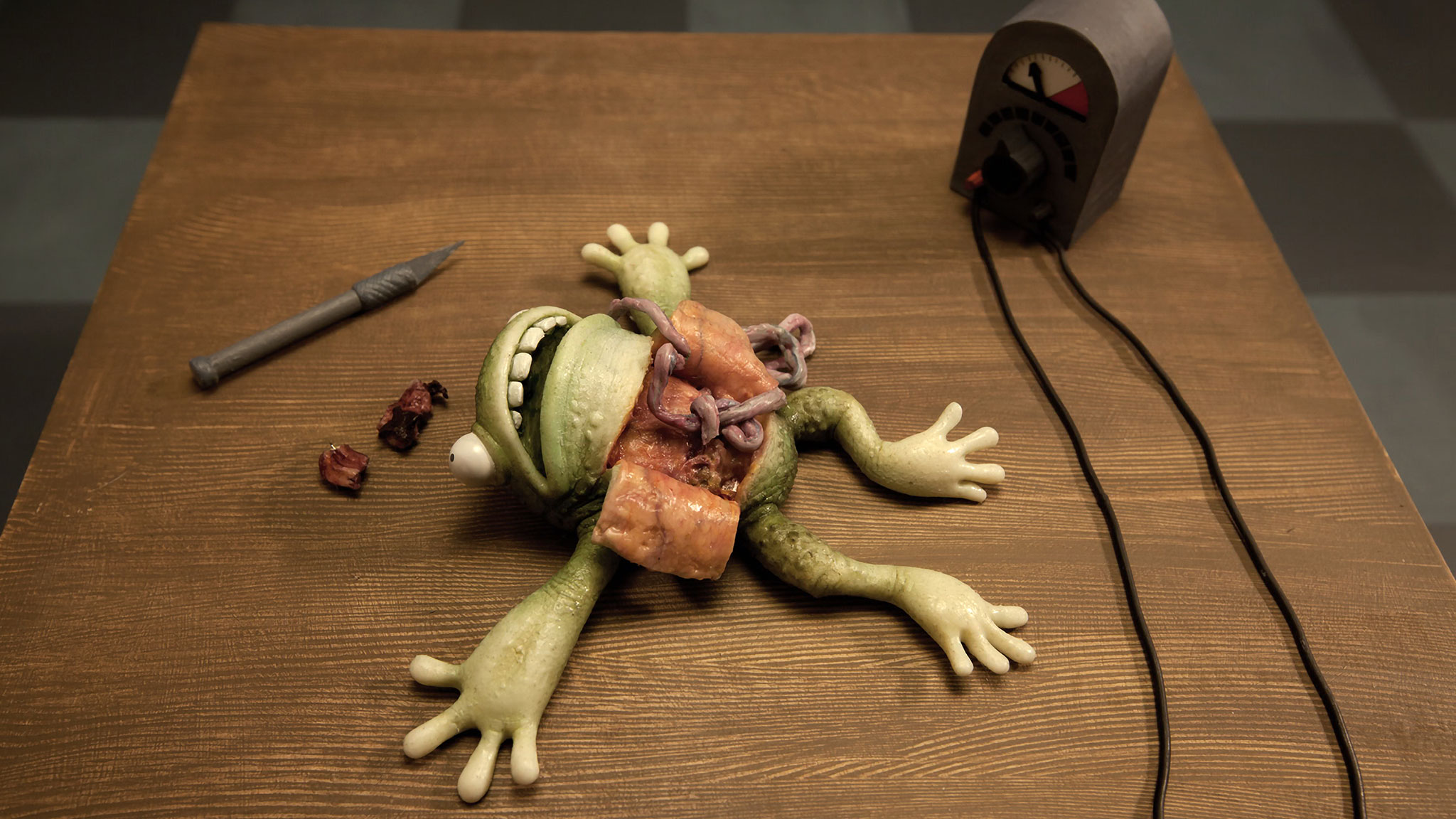
Barker’s fourth film has all the markings of his previous work: anarchic humour, impeccable comic timing, music in a key role and a story that appeals to both kids and adults. This time, however, he uses a new technique: stop-motion puppet animation, which he combines with 2D animation. Animators Sylvie Trouvé and Dale Hayward handle the puppets, while Barker draws the 2D sequences.
If I Was God… won multiple awards, including the 2017 Gémeaux for Best Animation.
A little girl
In the opening sequence of Good Luck to You All (2025), Barker’s latest release, a little girl plays with her toys. A small robot suddenly walks up to her. She grabs it, tears off its head and replaces it with her doll’s, plays with it for a while, then tosses it aside. The robot gets up, leaves the house, and sets off to explore the outside world. There, it begins to grow, eventually becoming a giant. It’s not long before it poses a threat to everything around it. Meanwhile, a fragmented voiceover of scientific and philosophical reflections on the ramifications of AI plays in the background. Has the little girl unwittingly created an intelligent machine endowed with consciousness, capable of destroying us? This fanciful tale, both amusing and unsettling, offers a reflection on AI, our latest technological “toy.”
Good Luck to You All, Cordell Barker, provided by the National Film Board of Canada
This time, it’s neither a cat, nor a strange visitor, nor a cow, nor a frog, but a little girl who sets the chain of events in motion by replacing the robot’s head. However, like the cow in Runaway, she also serves as a point of contrast, her childlike perspective set against the more articulated views of the scientists and philosophers. This may well reflect the viewer’s own position, caught between the two.
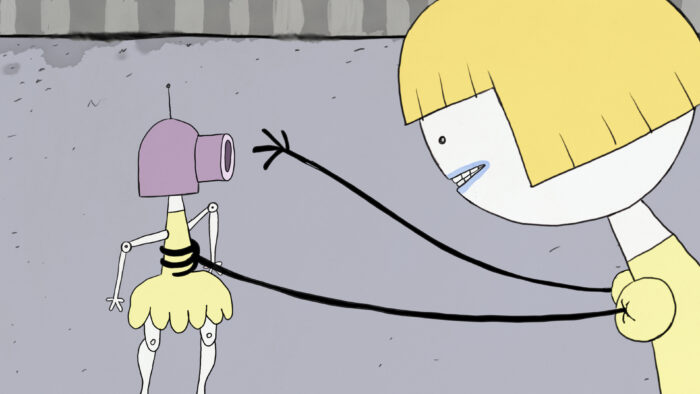
Good Luck to You All marks a turning point in Barker’s work. Though he reverts to hand-drawn animation and his characteristic offbeat humour, he also incorporates documentary elements for the first time. Music, too, plays a less prominent role. More importantly, Barker raises difficult questions about how we will use AI in the future —questions we are unable to answer. The film suggests a future that’s both uncertain and unsettling. Indeed, isn’t its title drawn from a radio address given by Queen Elizabeth II (then Princess Elizabeth) in 1940, at the outset of the most devastating war in history? In the end, Barker seems to be wishing us all luck in a world governed by AI.
I invite you all to check out the film, newly available on our website. And if you haven’t already, you can catch his other four films on our channel, The Cordell Barker Collection.
A short message from our Marketing team
Our dreams are about to come true! Cordell is currently wrapping up work on a Christmas-themed animated piece for the whole family: a 30-minute tale about a main character who’s straight from the South Pole. ANTA CLAUS is slated for release in December 2026. Stay tuned!