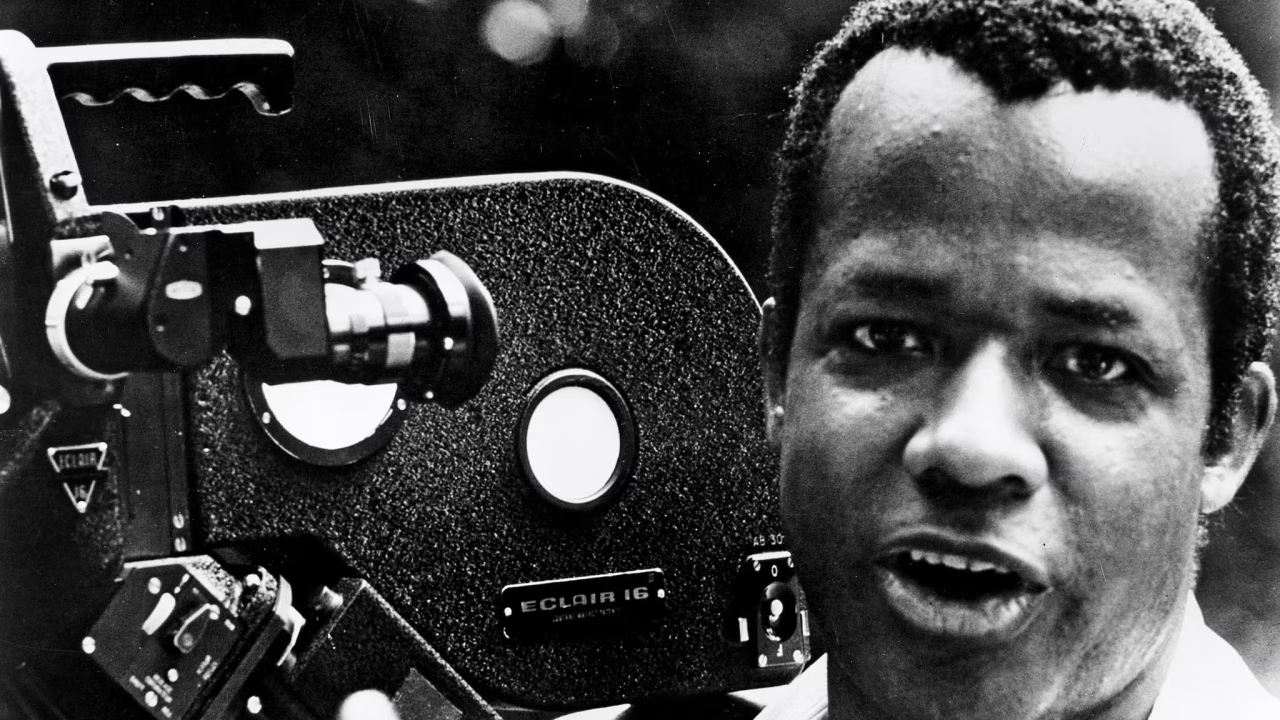
William Greaves at the NFB: Where It All Began
William Greaves at the NFB: Where It All Began
Born in Harlem on October 8, 1926, filmmaker, producer and activist William Greaves would have turned 100 this year. To mark the occasion, the Barbican in London is paying tribute to him with a retrospective called I Am Furious Black: The Films of William Greaves, running from October 21 to November 28, 2026. The screening on November 12 will be dedicated to the filmmaker’s short films, made between 1959 and 1974, including Emergency Ward, produced at the National Film Board in 1959.
Emergency Ward, William Greaves, provided by the National Film Board of Canada
The NFB played a central role in William Greaves’ career. It was here that he learned the basics of filmmaking. This is where it all began for him.
This blog post takes a look back at those formative and creative years, which served as a tremendous springboard for his ensuing career.
In the late 1940s, Greaves, who had trained at the prestigious Actors Studio in New York, played several roles in theatre and film. But he was deeply frustrated by the lack of substantial roles for African Americans, which were limited to stereotypical and unoriginal characters due to the pervasive racism in American culture at the time. Exasperated by the degrading and caricatured portrayals he saw on American screens, he realized that if he wanted to change the image of Black people, he would have to move behind the camera. He began taking classes at City College of New York under the guidance of Hans Richter but quickly realized that there was no place for him in the American film industry, which he described at the time as “a kind of apartheid.”[1]
It was at this point that he turned to the NFB. Greaves was familiar with the work and writings of John Grierson, the NFB’s founder and first Commissioner, who viewed cinema as a tool for social change and public education. This vision of cinema resonated with Greaves. Convinced that this was where he needed to learn his craft, he immigrated to Canada and settled in Ottawa, where the organization’s headquarters was located. He joined the NFB on November 15, 1952, as a film apprentice.
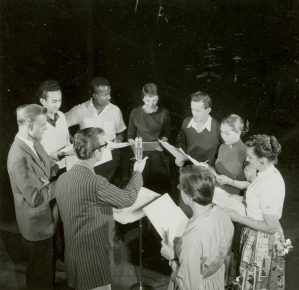
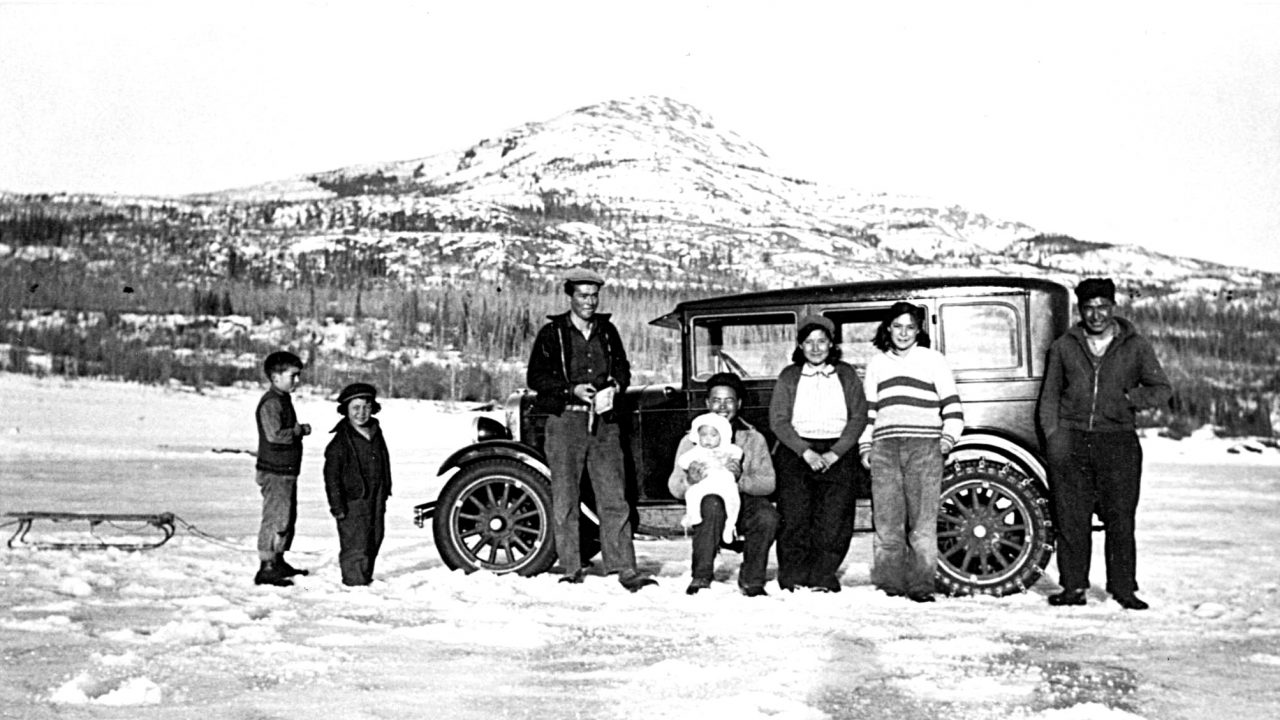
Trained as an actor, he initially worked as a narrator. In fact, his voice can be heard in Bernard Devlin and Raymond Garceau’s The Settler (1952), a short film about the settlement of Quebec’s Abitibi region in the 1930s. Alongside sound engineer Clarke Daprato, he then began to learn the ins and outs of sound production. From 1953 to 1955, he edited the sound for several documentaries, including Julian Biggs’ Frontier College (1954) and Roger Blais’ The Dikes (1955). He was officially hired on January 1, 1954, as a production assistant. He did not actually hold this position, however, because after working in sound editing, he moved on to film editing. He worked primarily with the Unit B team, led by producer Tom Daly, whose mission was to produce commissioned, scientific, cultural and animated films. From 1956 to 1960, Greaves served as editor on about 15 films produced by this unit.
Frontier College, Julian Biggs, provided by the National Film Board of Canada
In 1956, the NFB moved its headquarters to Montreal, into a brand-new building that was constructed specifically to meet its needs, and Greaves, along with most of the NFB’s staff, moved there as well. In addition to his work as an editor, Greaves began directing, and he was initially entrusted with commissioned films. He directed and edited Putting It Straight (1957), a docudrama commissioned by the dental health division of the then-Department of National Health and Welfare, about malocclusion in children. Then, the following year, he wrote, directed and edited Smoke and Weather (1958), a film commissioned by the Forestry Branch of the Department of Northern Affairs and Natural Resources, about the work of forest rangers tasked with monitoring potential forest fires.
Putting It Straight, William Greaves, provided by the National Film Board of Canada
In 1958, Unit B launched the first episodes of the television series Candid Eye. These 14 short films, each about 30 minutes long, aired on CBC from 1958 to 1960 and were the result of a new approach that would forever change the way documentaries were made at the NFB. It was a different way of making films, inspired by the concept of the “decisive moment” coined by photographer Henri Cartier-Bresson. The idea was to shoot with a small crew, lighter equipment, without artificial lighting and sometimes even without a script, to capture the most powerful, decisive moments of a scene as they happened. This approach emphasizes spontaneous shooting and a candid look at reality—hence the series’ name—while minimizing outside interference. Candid Eye would go on to enjoy great success with audiences and become one of the NFB’s seminal series.
William Greaves, Tom Daly, Wolf Koenig, Terence Macartney-Filgate, Roman Kroitor and Stanley Jackson were at the heart of this new approach to reality, which was referred to at the time as “direct cinema” or “cinéma vérité.” Greaves also edited the first Candid Eye episode, Blood and Fire (1958), which aired on October 26, 1958, on the CBC and focused on the men and women who had dedicated their lives to serving the Salvation Army. He also directed and edited Emergency Ward (1959), an intimate and unvarnished portrait of the daily operations inside the Montreal General Hospital’s emergency ward, which is undoubtedly his best-known and most accomplished film from his time at the NFB.
Blood and Fire, Terence Macartney-Filgate, provided by the National Film Board of Canada
In the early 1960s, shortly after completing Four Religions (1960)—a one-hour documentary about Christianity, Hinduism, Buddhism and Islam, the world’s four major religions—NFB management offered him a permanent position in the Scientific Film Unit in Unit B. He declined the offer and chose to leave the NFB. The civil rights movement was in full swing in the United States at the time, and he was determined to be part of it.
The eight years William Greaves spent at the NFB undoubtedly marked a pivotal moment when the actor—frustrated by the lack of substantial roles for African Americans—definitively transformed himself into an accomplished filmmaker. By joining the renowned Unit B, he not only defied the racial barriers of the time to become the institution’s first Black director, but he also acquired a deep mastery of the language of cinema. More than just a training ground, his time at the NFB equipped Greaves with all the tools he needed to return to the US and establish himself as one of the pillars of African-American independent cinema.
I encourage you not to miss the documentary Once Upon a Time in Harlem, filmed by William Greaves in 1972 and completed in 2026 by his son, David Greaves. It made its Canadian premiere at the Toronto International Film Festival and has been playing in theatres across Canada since October 23.
[1] Sept. 12, 1991, interview with Phyllis Klotman and Janet Cutler, Black Film Center/ Archives Interview Collection.