Storytelling Through Memory: Exploring Maybe Elephants through the NFB’s Quick Start Guide
Storytelling Through Memory: Exploring Maybe Elephants through the NFB’s Quick Start Guide
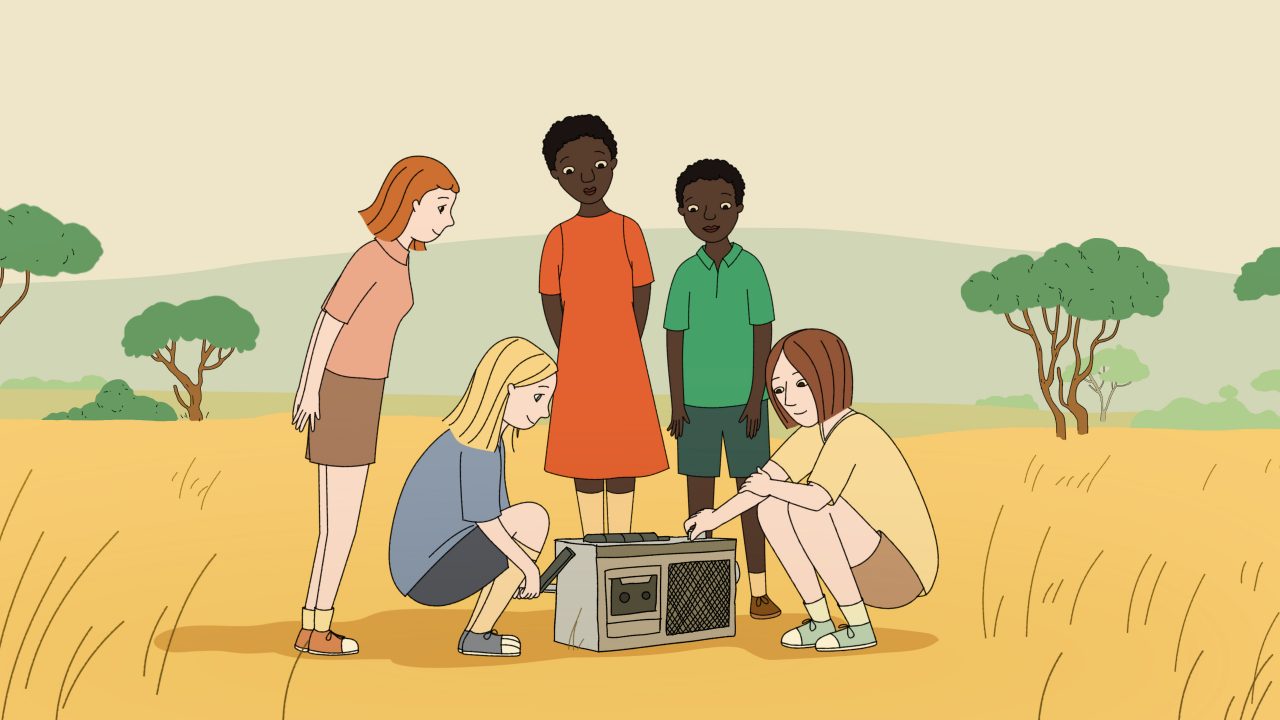
Maybe Elephants, Torill Kove, provided by the National Film Board of Canada
At a glance:
Ages: 12–15
Time: 45–60 minutes
Resource format: A three-page modifiable, printable Google document that includes a student worksheet, answer key, discussion questions, and a project idea.
School Subjects:
Family Studies, Health/Personal Development, English Language Arts, Social Studies
Topics:
Personal growth, mental health, well-being, happiness, independence, adolescence, memory
As a high school Communications Technology teacher, I’m always looking for interesting ways to present storytelling to students. Storytelling is the backbone of a successful film, animation, or photography project. Torill Kove’s Maybe Elephants is a great foundation for supporting students as they craft personal narratives. The newly released NFB Quick Start Guide for this animated short is a simple yet effective resource for teachers that maps a way through the film’s key plot elements.
Using the Quick Start Guide in Class
Reviewing the film and the guide with students can easily be done in a single period, setting students up to develop their own stories through simple storymaps, animation thumbnails, or storyboards in subsequent classes. As Maybe Elephants takes viewers through a specific period in Kove’s life, it’s an interesting case study in how the world has changed and how visual metaphors can be used to communicate ideas. Teachers looking for content to support subject areas such as English, Social Studies, and, potentially, Healthy Living (there is a mental well-being component woven throughout the film) would benefit from sharing this film with students.
Maybe Elephants: A Dive into Memory
Maybe Elephants begins with beautiful, fleeting images of Kove as a young girl, bringing us into her childhood. As the lines of her memory dance on the screen, she comments that she had a “happy childhood,” remarking how memories are “flickering images” that only she, as the holder of the memories, can see. This sets the stage for viewers, allowing us to remove our critical hats for a moment, understanding that what is about to unfold is a single perspective of a potentially much deeper narrative. As we are brought from Norway to Nairobi and back, we see how life’s little moments shape the characters’ memories differently. They are all building stories from these experiences, living through the same moments, but taking from them personal anecdotes that affect who they will become. Kove’s story encourages students to start from a point of personal reflection, moving towards an understanding of how our memories shape the stories we tell. The film demonstrates that effective storytelling doesn’t need high drama or intense conflict, but rather recognition of how the small moments in our histories can shape the stories we tell about ourselves.
Using the Quick Start Guide to Spark Language Learning
Whether exploring Maybe Elephants through a Communications Technology course or another subject discipline, starting the storytelling process by identifying a story’s beginning, middle, and end can help students map out its arc. This can also be a great strategy for supporting Multilingual Language Learners who are building their English proficiency. Teachers can get a good sense of a student’s understanding of a story through a quick conversation or through the use of a graphic organizer that guides them in identifying the key plot elements. The Quick Start Guide further supports students in identifying the important moments of Kove’s memories through the During Film questions, while the After Viewing questions support conversations with students regarding visual metaphors and the impact that imagery can have on the storytelling process. These storytelling strategies (building a story arc; creating visual metaphors) are important for students to understand when developing their own story outlines.
Examining the Use of Imagery
The way Kove weaves her memories into the timeline of the film can also help students understand how to capture audiences through the strategic placement of imagery. The “flickering” lines of the outro cycle are also used for the intro, bringing viewers back to the starting point of the story in order to emphasize the changes the characters have gone through. As students craft their own narratives, it’s important for them to think about how the order of each moment of their story on the timeline will influence the engagement of the viewer and what they will remember in the end. For example, the metaphor of the dark cloud revealing itself at different moments in Kove’s story effectively communicates the impact that her mom’s well-being had on the family and helps us to understand how she was processing these moments in her childhood. Well-timed visual references such as these are important concepts for students to understand when digging into the more complex ideas of their stories or when determining the overall impact the story will have on the audience.
Backwards Storyboarding
An extension activity that I’ve used in my class to help identify these key moments on a story’s timeline is the process of backwards storyboarding. Backwards storyboarding starts with a completed film, asking students to sketch (these can be very rough sketches) the key moments or scene changes of a film onto a storyboard template. Students are then required to identify the shots, angles, and actions affiliated with the scene to complete the storyboard. This activity not only helps to reinforce an understanding of camera angles and shots, it further reinforces an understanding that the order of images does matter and should be a very intentional process.
As the Quick Start Guide concludes, it presents an interesting launchpad for extending conversations to include the larger, more complex concepts explored in the film, such as: What is the importance of our memories even if they might not be accurate? This question is a strong prompt for a reflective paragraph asking students to connect the film to the world they might find themselves in. While it’s true, now more than ever, that we need to work with students to critique and challenge the integrity of the information and content they consume (especially online), we also need to make space for storytellers to recount personal moments as they remember them, knowing that the strength of a story hinges more on its overall impact than the historical accuracy of each moment.
Check out the Quick Start Guide here!
Jon Lewis has been in education for over 20 years, working in both Elementary and Secondary panels in various capacities. He’s held regional roles within the education system and worked as a curriculum coordinator for digital engagement, as well as a photographer and videographer for a community of emerging local artists. His passions are photography, film, and animation, which have led him to his most recent role as a high school Communications Technology teacher.
Pour lire cet article en français, cliquez ici.
Discover more Educational blog posts | Watch educational films on NFB Education | Watch educational playlists on NFB Education | Subscribe to the NFB Education Newsletter