The NFB at Annecy: 70 Years and Counting
The NFB at Annecy: 70 Years and Counting
Founded in 1960, the Annecy International Animated Film Festival was originally held every two years before becoming an annual event in 1997. Over the decades, it has grown into one of the world’s premier events for animated film. Each year, awards are presented in a range of short- and feature-film categories. Among the short films selected for competition at the 2026 edition, which runs from June 21-27, is Catherine Lepage’s Ultra Strong (2026).

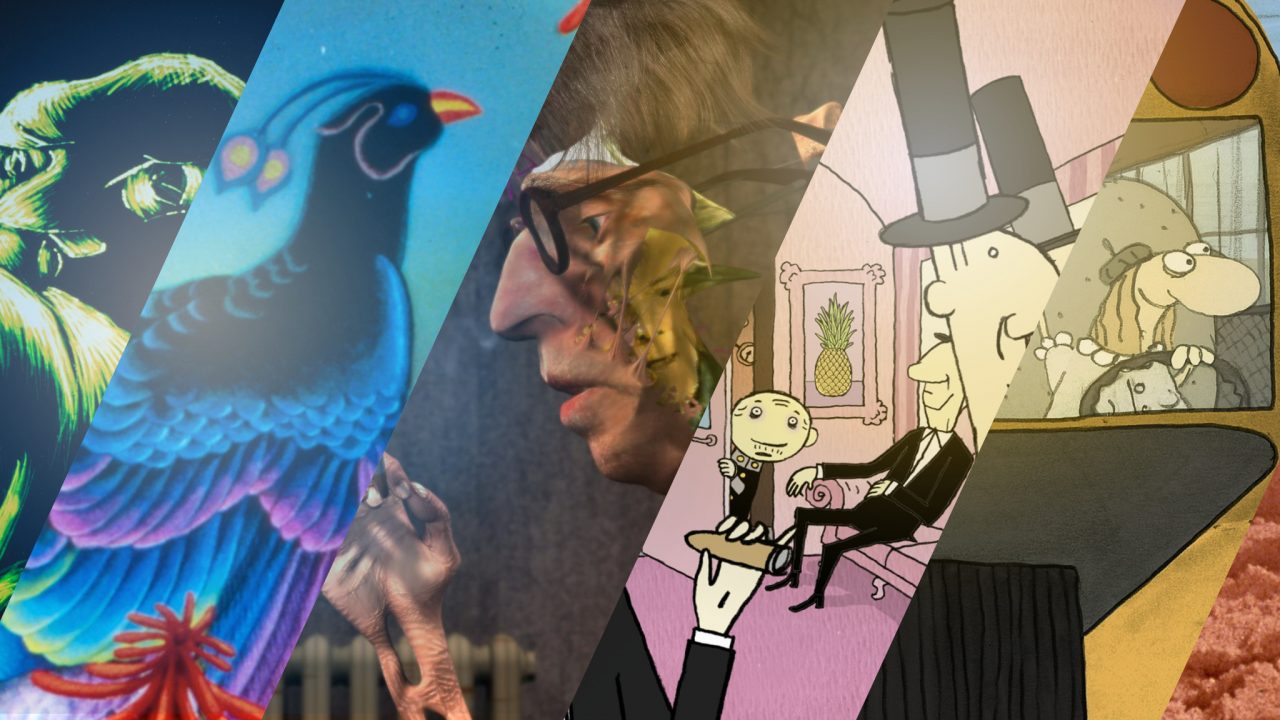
NFB productions and co-productions have long been a fixture at Annecy. Since 1960, more than 300 of them have featured in the lineup, earning more than 60 awards, with 25 selections and four awards since 2020 alone. Remarkably, no edition of the festival has been held without at least one film produced or co-produced by the NFB.
Here’s a look back at some of the high points of the NFB’s seven-decade presence at Annecy.
Top award winners
The Short Film Cristal—known as the Annecy Cristal from 2003 to 2012 and, previously, the Grand Prix for Best Short Film—is the festival’s highest distinction. Nine NFB films to date have received this honour.
In 2020, the Cristal went to Theodore Ushev for The Physics of Sorrow (2019), a moving portrait of a Bulgarian immigrant caught between childhood memories of his homeland and his adult life in Canada. A meditation on rootlessness and melancholy, the film also received the FIPRESCI Prize (Fédération internationale de la presse cinématographique). Ushev, an Annecy regular, is no stranger to recognition at the festival: His Blind Vaysha (2016) won both the Jury Award and the Junior Jury Award that year, while Gloria Victoria (2012) received the FIPRESCI Prize at the festival’s 37th edition.
The Physics of Sorrow, Theodore Ushev, provided by the National Film Board of Canada
Memory gaps
In 2016, Franck Dion won the Cristal for The Head Vanishes (2016), following Chris Landreth’s win for Subconscious Password (2013) three years earlier. Their films may be radically different in style and tone, but both address the same theme: memory. Dion’s work focuses on the fading recollections of an elderly woman living with dementia, while Landreth’s protagonist struggles with an awkward lapse. If the momentary blank in Subconscious Password is the pretext for a playful romp through the unconscious, the ebbing memories of Jacqueline, heroine of The Head Vanishes, form the basis of a tender and poetic meditation on irreversible loss.
Subconscious Password, Chris Landreth, provided by the National Film Board of Canada
Women’s cinema
Women filmmakers also occupy an important place in Annecy’s history. Four have received the festival’s highest distinction: Regina Pessoa for Tragic Story with Happy Ending (2005), a tale about difference and self-affirmation; Wendy Tilby and Amanda Forbis for When the Day Breaks (1999), which follows Ruby, a young pig in search of reassurance after witnessing a tragedy; and Caroline Leaf for Two Sisters (1991), where the arrival of a stranger upends the orderly routine of a pair of siblings.
When the Day Breaks, Wendy Tilby & Amanda Forbis, provided by the National Film Board of Canada
Pessoa would return to Annecy over a decade later with Uncle Thomas: Accounting for the Days (2019), which won both the Jury Award and the Best Original Music Award. When the Day Breaks went on to receive some 40 awards internationally, including the Short Film Palme d’Or at Cannes, while Two Sisters collected a further nine awards in Canada and abroad.
Two Sisters , Caroline Leaf, provided by the National Film Board of Canada
Artists from abroad
The NFB’s animation studios have welcomed a number of international filmmakers over the years. These include Ishu Patel, originally from India, and Co Hoedeman, born in the Netherlands. Patel won the Grand Prix for Afterlife (1978), an experimental work on death and dying. Hoedeman received the same distinction for The Sand Castle (1977), a children’s film about a small sand figure who, helped by his friends, builds a castle to protect himself from the wind.
Afterlife, Ishu Patel, provided by the National Film Board of Canada
Afterlife was a major critical success, receiving close to a dozen awards internationally. The Sand Castle, in turn, won over 20 awards, including the Oscar for Best Animated Short.
A prolific period
The 2010s were a particularly successful decade for NFB productions and co-productions, with 34 selections and 15 awards. The 1990s and 2000s were equally strong, with 45 selections and 20 awards. These years saw many remarkable works by talented animators.
Notable titles include Runaway (2009) by Cordell Barker (Special Jury Prize); Louise (2003) by Anita Lebeau (Canal J Jury Junior Award for Short Films); Ryan (2004) by Chris Landreth (Special Jury Prize), which also won the Oscar for Best Animated Short; The Boy Who Saw the Iceberg (2000) by Paul Driessen (Special Jury Prize and FIPRESCI Prize); The Hat (1999) by Michèle Cournoyer (FIPRESCI Special Mention); Bob’s Birthday (1993) by Alison Snowden and David Fine (Short Film Award), also an Oscar winner for Best Animated Short; and Ex-Child (1994) by Jacques Drouin (UNICEF Award for a Short Film).
The Hat, Michèle Cournoyer, provided by the National Film Board of Canada
The early years
Though the festival only had five editions in the 1980s (when it was still held biannually), NFB productions and co-productions received 20 selections and three awards, including the Special Jury Prize for Beginnings (1980) by Clorinda Warny, Suzanne Gervais and Lina Gagnon.
Beginnings, Clorinda Warny, Suzanne Gervais & Lina Gagnon, provided by the National Film Board of Canada
The 1970s had been even more productive, with 32 selections and eight awards over that decade’s five editions. Noteworthy titles include This Is Your Museum Speaking (1979) by Lynn Smith (Second Special Jury Award); The Metamorphosis of Mr. Samsa (1977) by Caroline Leaf (International Critics’ Award); Evolution (1971) by Michael Mills (Children’s Film Award), also an Oscar nominee for Best Animated Short; and Synchromy (1971) by Norman McLaren (Jury Distinction).
Evolution, Michael Mills, provided by the National Film Board of Canada
Lastly, the 1960s saw 12 NFB selections and one award: the Special Jury Prize for Alphabet (1966) by Eliot Noyes, Jr.
Alphabet, Eliot Noyes, Jr, provided by the National Film Board of Canada
I encourage you to view or revisit the short films featured in this article.
To discover more award-winning films, visit our dedicated festival channel by clicking here.
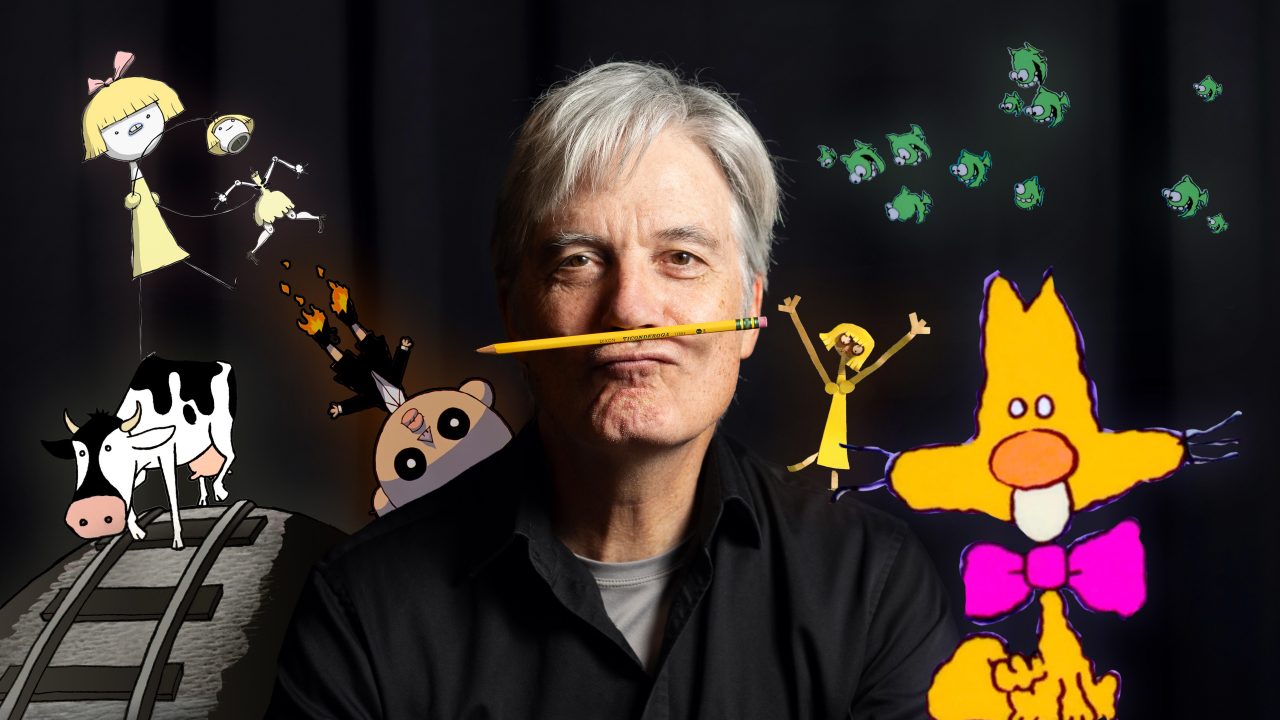

The National Film Board of Canada has a long connection with animation and filmmaking, making its presence at Annecy a meaningful opportunity to celebrate that creative tradition. The occasion also offers a chance to look back at decades of work while considering what lies ahead for animation.
Seventy years represents a significant span of time in the world of film. Styles, technologies, and storytelling methods have changed considerably, yet animation continues to provide artists with a unique way to explore ideas, emotions, and different perspectives.
Annecy also serves as a meeting point for animation enthusiasts and creators from around the world. Events like these help bring attention to both established work and new voices, creating opportunities for audiences to discover different approaches to animated storytelling.
As the NFB marks another chapter at Annecy, its history can be viewed as part of a broader story about the evolution of animation. Looking toward the future, creativity and experimentation will continue to shape the medium. For another online entertainment option, you can explore https://chickenroadcanada.ca.