The NFB and the Annie Awards: A History of Excellence Going Back 50 Years
The NFB and the Annie Awards: A History of Excellence Going Back 50 Years
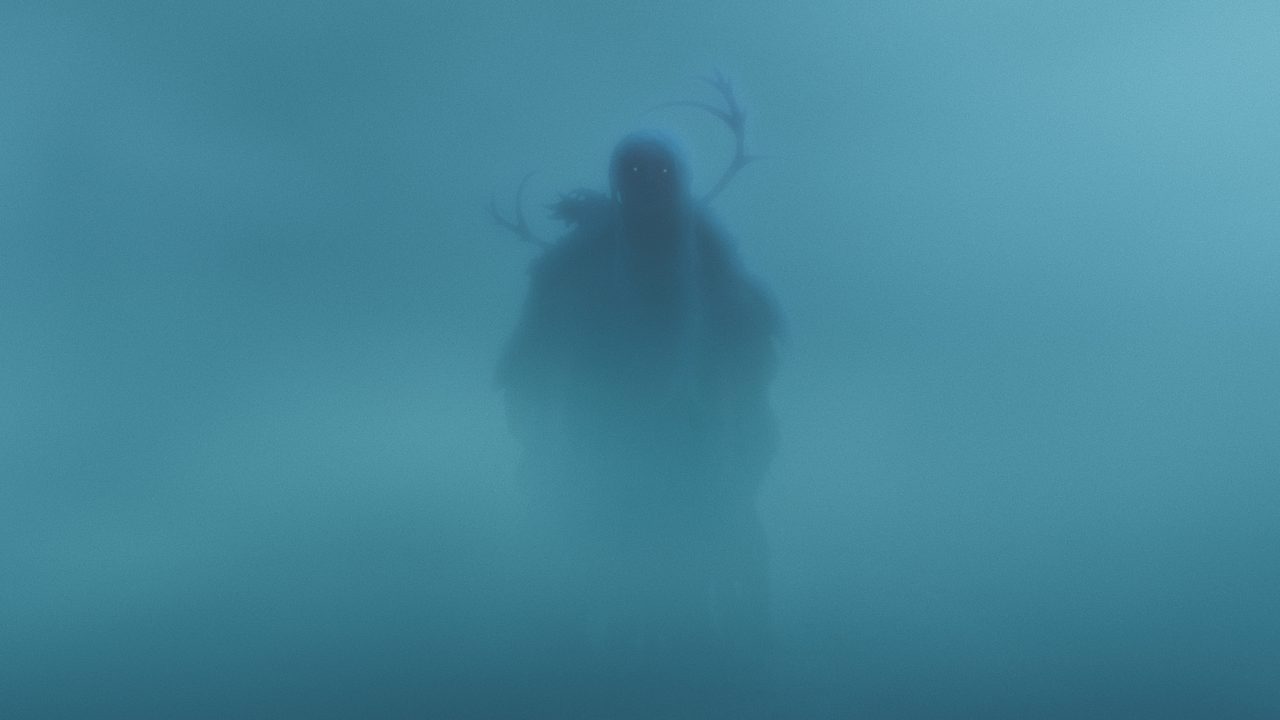
Since 1972, the annual Annie Awards, created by the Los Angeles branch of the International Animated Film Association (ASIFA-Hollywood), have recognized excellence in animation. The Annies include a number of categories of awards for achievements in film, television productions and video games. This year, The Girl Who Cried Pearls (2025), by Chris Lavis and Maciek Szczerbowski, is nominated in the category of Best Short Subject. (It is also in the running for an Oscar.)
The Girl Who Cried Pearls, Chris Lavis & Maciek Szczerbowski, provided by the National Film Board of Canada
One of the prizes given out by ASIFA-Hollywood every year is the Winsor McCay Award for career contributions to the art of animation. In 1975, this prestigious honour was given to filmmaker Norman McLaren, alongside none other than Walt Disney.
The 53rd Annie Awards, recognizing films released in 2025, take place on February 21, 2026. So, the nomination for Lavis and Szczerbowski’s short film marks 50 years (1975–2025) of NFB artists and craftspeople having a presence at the awards.
This blog post looks back at some of the Annie highlights from those 50 years.
The great Norman McLaren
As mentioned in the introduction, Norman McLaren won the Winsor McCay Award in 1975. By then, McLaren was already an accomplished and renowned artist, whose influence extended far beyond Canada. Most of the 60-odd films he’d made at that point were produced by the NFB, and they’d won more than 200 awards around the world. A true animation genius, avant-garde creator and pioneer in electronic music and 3D animation, McLaren is undoubtedly one of the most important figures in the history of film animation.
Opening Speech: McLaren, Norman McLaren, provided by the National Film Board of Canada
From the NFB to the Beatles
In 1993, the Winsor McCay Award went to filmmaker George Dunning. He is best known for Yellow Submarine (1968), which he made in the United Kingdom with the Beatles. But few people know that he was born in Toronto and began his animation career at the NFB. Soon after completing his studies at the Ontario College of Art & Design, he was recruited by Norman McLaren to work at the NFB’s new Animation Studio in Ottawa. There, he learned the basics of animation, and between 1943 and 1950 he directed 10 films, mostly using paper cutouts. One of these films was Cadet Rousselle (1946), which won numerous awards at festivals in the United States and Italy. Dunning’s last NFB film, Family Tree (1950), was co-directed with Evelyn Lambart, who would win the Winsor McCay Award in 2022.
Family Tree, George Dunning & Evelyn Lambart, provided by the National Film Board of Canada
From Harvard to the NFB
In 2016, that award went to Caroline Leaf—the first female NFB filmmaker to win it. Born in Seattle, she studied architecture and visual arts at Harvard University’s Radcliffe College. During the final year of her studies, she was introduced to animation through a course taught by filmmaker and producer Derek Lamb, who would go on to work at the NFB. Leaf made a handful of films in the United States before moving to Montreal in 1972 to work at the NFB’s Animation Studio. She remained there until 1991 and directed nine films, including the Oscar-nominated The Street (1976) and Two Sisters (1990), for which she used the unusual animation technique of etching directly onto 70mm film stock. During her remarkable career, she experimented with multiple animation techniques and was a trailblazer in several of them, including sand animation and painting on glass.
Two Sisters , Caroline Leaf, provided by the National Film Board of Canada
An animation duo
The following year, Wendy Tilby and Amanda Forbis were Winsor McCay winners. The pair—who met at Vancouver’s Emily Carr College of Art and Design, where they were studying film, video and animation—have worked as a team since 1990. Their first film, When the Day Breaks (1999), was nominated for an Oscar and won more than 30 international awards, including the Palme d’or for short film at Cannes. Their next two films were also critically acclaimed and won numerous awards. Wild Life (2011) received a dozen Canadian and international awards, and The Flying Sailor (2022) won more than 20, including best animated short at Sundance. Both films also received Oscar nominations. Wendy Tilby and Amanda Forbis have created a magnificent, warm and inspiring body of work with a unique visual style, winning the hearts and capturing the imaginations of audiences around the world.
Wild Life, Amanda Forbis & Wendy Tilby, provided by the National Film Board of Canada
An accomplished producer
In 2023, the Winsor McCay Award went to producer Marcy Page. Originally from California, she immigrated to Canada and joined the NFB in 1990—first as a director and associate producer and later as a producer. In that role, she always made a point of seeking out eclectic and unconventional projects that stretched the boundaries of animation. During a fruitful career spanning 24 years, she produced dozens of films by both emerging and experienced directors that, over time, earned more than 350 international awards for the NFB. That impressive track record includes six Oscar nominations, for Torill Kove’s My Grandmother Ironed the King’s Shirts (1999) and Me and My Moulton (2014); Chris Lavis and Maciek Szczerbowski’s Madame Tutli-Putli (2007); Amanda Forbis and Wendy Tilby’s Wild Life (2011); Chris Landreth’s Ryan (2004); and Kove’s The Danish Poet (2006). The latter two films would both go on to win Academy Awards.
Madame Tutli-Putli , Chris Lavis & Maciek Szczerbowski, provided by the National Film Board of Canada
Other NFB filmmakers who’ve won the Winsor McCay Award are Evelyn Lambart (2022) and Charlotte Reiniger (2023), as well as composer, sound editor and sound designer Normand Roger (2024), along with director and producer Eunice Macaulay (2024).
The films
And what about individual NFB productions and co-productions? Over the last two decades, they’ve received no fewer than 14 Annie Award nominations in the Best Short Subject category. Of these 14 films, seven have also been Oscar-nominated: Ryan (2004) by Chris Landreth, Sunday (2011) by Patrick Doyon, Wild Life (2011) by Wendy Tilby and Amanda Forbis, Me and My Moulton (2014) by Torill Kove, Blind Vaysha (2016) by Theodore Ushev, The Flying Sailor (2022; another Tilby and Forbis film) and The Girl Who Cried Pearls (2025) by Chris Lavis and Maciek Szczerbowski.
Sunday, Patrick Doyon, provided by the National Film Board of Canada
Director Regina Pessoa is the only NFB filmmaker to have won a Best Short Subject Annie. Her film Kali the Little Vampire was nominated in 2012, and she won for Uncle Thomas: Accounting for the Days (2018).
Uncle Thomas: Accounting for the Days, Regina Pessoa, provided by the National Film Board of Canada
Four directors who’ve made several NFB-produced films have also been nominated over the years: Patrick Bouchard for Bydlo (2012), Theodore Ushev for Gloria Victoria (2013), Cordell Barker for If I Was God… (2015) and Claude Cloutier for Carface (2015).
Carface, Claude Cloutier, provided by the National Film Board of Canada
And, last but not least, the excellent short Hedgehog’s Home (2017), by Eva Cvijanovic—her second film for the NFB, made after directing several films in the private sector.
Hedgehog’s Home, Eva Cvijanovic, provided by the National Film Board of Canada
I invite you to watch (or rewatch) all the films mentioned in this post.
Long live the Annie Awards!
Long live the NFB!